

The $2,000/Month Mushroom Side Business That Purchased a 70-Acre Farm - Side Hustle Nation
Side Hustle Nation focuses on enhancing your personal profitability, often collaborating with companies that align with this goal. If you sign up or purchase through our partner links, we may receive compensation—at no additional cost to you. Learn more.
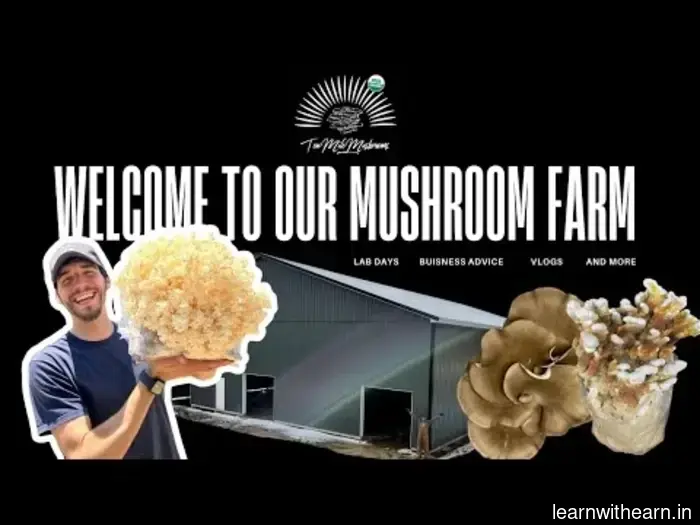
What if a spare closet could transform into a farm, a warehouse, and encompass 70 acres of land? This is the journey that Kyle Beaver embarked on. Based in rural Pennsylvania, Kyle operates Ten Mile Mushrooms and Pro Grow Club, cultivating gourmet and medicinal mushrooms such as oyster, lion’s mane, and reishi.
Prior to his mushroom venture, Kyle spent two years at Pennsylvania state fairs, selling stuffed pretzels from a food truck. Witnessing customers travel 3 hours for a pretzel solidified his vision for his own business: a niche market, something unique to his area, and manageable within a small space.
A Google search for businesses suited to small spaces led him to a mushroom cultivation webpage from the UK. Nearly a decade later, that initial search has evolved into a multi-six-figure enterprise.
Tune in to Episode 753 of the Side Hustle Show to discover: how to start growing gourmet mushrooms for $300, where to sell mushrooms and their value per pound, and how a $1,000/year farm can unlock a $600,000 land loan.
Get Tailored Side Hustle Ideas: Enter your email to receive my complimentary AI-Assisted Brainstorming Worksheet now. You'll also gain access to my top side hustle tips and a weekly newsletter. You can unsubscribe at any time.
Kyle wasn't initially looking for mushrooms; he was seeking business ideas viable in a limited space. The UK page he found outlined potential earnings per square meter annually, capturing his interest, especially since no one in his vicinity was cultivating those mushrooms.
Upon checking local farmers markets, he discovered a lack of competition. Even the large supermarkets nearby still do not stock gourmet mushrooms. Kyle specializes in wood-loving species typically found in the wild, including oysters, lion’s mane, reishi, and other medicinal varieties often used in mushroom coffee. “Nobody’s doing this in the area. I haven’t even heard of these mushrooms,” he mentioned.
Starting a mushroom-growing side hustle involves remarkably low costs compared to other agricultural businesses. Kyle's actual startup expenses totaled $300 for straw and poly tubing, cultivating oyster mushrooms in a spare room without fans or coolers. Setting up at farmers markets required an investment of $200–300 for essentials like a tent, table, cash box, and a small business insurance policy, usually around $1M and relatively inexpensive. A complete grow-and-sell setup could cost a couple of thousand dollars.
He began with no money and no credit, advising aspiring growers to gain some experience before investing in a dedicated grow room as a closet, spare room, or porch is sufficient to start.
How much money can one make from growing mushrooms? The grow tent behind Kyle during our call occupies 4 square feet and yields 16 pounds of mushrooms every two weeks, without any shelving yet installed.
Retail at farmers markets brings $24–$30 per pound for fresh mushrooms sold in half- and quarter-pound packs. Wholesale to restaurants nets $10–$12 per pound, approximately a 50% margin. Each grow block, costing $10, can provide 2–4 pounds, generating $60–$80 in retail sales—yielding over 75% gross margin on the cost of goods. For context, Kyle references industry statistics indicating that an acre of corn results in a loss of $150. Specialty mushrooms represent one of the few crops where even a small farm can sustain a living.
Understanding flushes and yields is essential. Grow blocks typically produce 2 to 3 significant flushes, with the first being the largest. Most commercial growers solely harvest the initial flush. After that, there’s typically a two-week wait before new growth appears, which can create bottlenecks in small grow rooms. However, spent blocks can still provide an extra pound or two when buried in the garden.
Kyle cautions against the “infinite mushroom hack” promoted online, which involves attempting to regrow mushrooms from scraps indefinitely. Each regrowth weakens the mushrooms genetically, whereas commercial growers start anew each week, allowing Kyle to rely on a consistent yield of 50 pounds weekly.
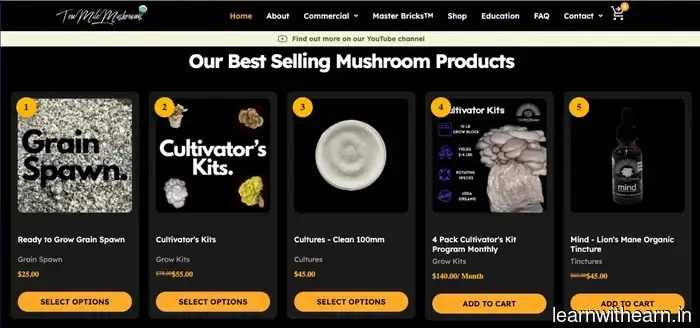
For small mushroom farms, four main sales avenues exist: farmers markets (the highest price per pound), CSAs (subscription boxes for local produce), direct-to-consumer sales (online kits, dried mushrooms, tinctures), and wholesale (restaurants and other buyers). Farmers markets were pivotal for Kyle; customers browsing familiar produce often stop when they encounter something novel.
Although Kyle has never operated a CSA himself, he has participated in several and believes it's more beneficial to collaborate with other farmers to offer a diverse collection rather than a mushroom-only CSA.
Kyle's revenue grew not from mushroom sales directly but from what







The $2,000/Month Mushroom Side Business That Purchased a 70-Acre Farm - Side Hustle Nation
How to launch a mushroom farming side business for $300 — including profit margins, sales avenues, and the USDA loan that offers land with no down payment.