

Loan Draw Inspections: My Experience Earning Over $2,000 a Month by Photographing Homes - Side Hustle Nation
Side Hustle Nation focuses on enhancing your personal profitability. To achieve this, we often collaborate with companies that align with our mission. If you register or make a purchase through one of our partner links, we may receive a commission at no additional cost to you. Learn more.
Did you know there’s a side hustle that allows you to earn money by driving around, photographing houses under construction, and turning it into a reliable source of side income? This is the lesser-known real estate side hustle that Lou Shaver from drawinspectortraining.com discovered during his retirement.
Lou works as a construction loan draw inspector. This venture requires very little upfront investment, no specialized licensing, and minimal selling efforts. He began this as a retirement activity, earning about $2,000 a month last year, and is now averaging around $4,100 monthly. Lou has a background as an inspector, initially in the Army and later for the Navy, and he is preparing to teach others this trade through his training program.
Tune into Episode 748 of the Side Hustle Show to find out:
- What a construction loan draw inspector actually does
- How to secure your initial jobs through inspection marketplaces
- The straightforward tools and low costs that facilitate this work
What Is a Construction Loan Draw Inspector?
When a bank provides funds to construct a home, it doesn't release the entire amount upfront. The builder receives payments in increments called draws, which are issued upon completion of each phase. Before the bank disburses the next draw, someone has to verify that the work has indeed been completed. That's where the draw inspector comes in. Lou travels to the site, takes photographs, and confirms that the builder's claims are accurate. As he explains, he serves as the bank's eyes and ears. This process establishes internal controls that protect the bank by releasing money gradually rather than all at once. Lou typically charges about $65 for each inspection.
How Lou Got Into the Business
Lou retired from the Army in 2012 and subsequently worked as an inspector investigator for the Navy. When he was ready for full retirement around 2022, he sought a new endeavor but was initially unsure how to proceed. He then decided to build a house himself, and the inspector who visited became his mentor, guiding him through the process. With prior inspection experience and a foundational understanding of home construction, Lou found it easy to learn the work. To illustrate, he mentored his daughter, who is a stay-at-home mom running a side photography business. In just six weeks (including two vacation weeks), she earned approximately $1,200.
How the Work Actually Flows
Each bank provides a draw sheet, which is a checklist of items to be verified. This sheet may contain between five and forty line items, covering stages such as:
- permits
- foundation
- framing
- final finish
Lou follows this list and assesses the completeness of each item. Speed is crucial, as inspection companies usually require reports to be submitted within 24 to 48 hours so that the bank can process and release funds. Lou maintains a flexible schedule because new inspection requests can arise throughout the day. Each night, he plans his route using Google Maps to organize his stops efficiently. If a nearby job request comes in, he incorporates it into his schedule.
Where the Jobs Come From
Lou does minimal cold sales. Instead, he subscribes to marketplace and connector services that link banks to local inspectors. He sets his own fees to remain competitive and secure jobs. The four platforms that keep him busy are:
- Nationwide Loan Inspections
- Built
- RAZE
- Inspection Pros, a company in North Carolina run by his mentor Steve.
He has also collaborated with Land Gorilla. Some platforms, like Built, allow lenders to select an inspector from a drop-down menu, ensuring that quality work leads to repeat assignments. Others, like Land Gorilla, post jobs for bidding, starting around $45 and increasing to $55 if no one accepts the job.
The Money: What Lou Actually Earns
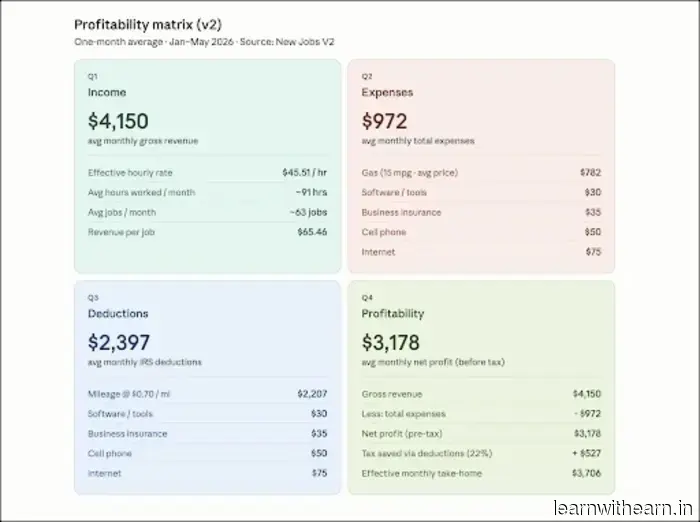
Lou keeps track of everything using what he calls his profitability matrix. On average, he earns about $4,150 a month while spending around $972. The majority of his expenses come from gas, which totals about $780. Other costs include approximately $30 for software, $35 for insurance, $50 for his cell phone, and $75 for internet. Additionally, mileage is deductible. Lou works around 91 hours a month, typically committing one full day and two half days each week. Most of his time is spent driving, covering 115 to 200 miles daily through the mountainous areas he enjoys.
Tools and Tech
Lou keeps his equipment straightforward. Most reports are submitted via each company's app or website, and several tools enhance his efficiency:
- Regrid: Retrieves parcel information, addresses, and ownership details, with the screenshot serving as his initial photo.
- iPhone with location services enabled: Incorpor







Loan Draw Inspections: My Experience Earning Over $2,000 a Month by Photographing Homes - Side Hustle Nation
Transform house photos into income as a construction loan draw inspector. Lou Shaver shares how he makes $2K to $4K monthly doing this!